
Can Vseebox Elite Replace Your Cable TV Subscription?
Cable TV subscribers are being lost at a rate of approximately 7% annually, while the streaming equipment market is expanding at a compound annual growth rate of 19%. The Vseebox Elite is challenging the traditional pay-TV model with its hardware architecture that supports 4K@120Hz video decoding (using H.265/HEVC compression technology to reduce bandwidth consumption to 15Mbps) and integrates six high-definition tuners. The 2024 Consumer Report shows that households using similar devices save an average of $85 per month on entertainment expenses - this is due to no need to pay for basic package fees (an average of $112 per month in North America) and set-top box rental fees ($7.99 per additional device). Users only need to pay an annual fee of 499 yuan to access over 2,000 live channel sources, including more than 500 high-definition channels integrated with free streaming media services such as Pluto TV and XUMO. In practical applications, user measurements in the Boston area have shown that after switching to vseebox elite, the family entertainment budget has been reduced by 62%.
The efficiency of content response directly determines the user experience. Relying on Gigabit Ethernet and Wi-Fi 6E technology (with a peak transmission rate of 3.6Gbps), this device can achieve cold start loading of live streaming media in less than 2 seconds, which is 70% higher than that of traditional set-top boxes. Its patented buffering algorithm keeps the lag rate of 1080p video below 0.9% under 10Mbps bandwidth, while the average lag rate of traditional IPTV services still reaches 3.5%. During the 2023 Super Bowl, Atlanta users watched the 4K HDR live broadcast via vseebox elite with a delay of only 3.2 seconds, which was better than the 6.8 seconds delay of cable TV. The 12-core processor built into the device processes 600 frames per second for dynamic compensation operations, solving the problem of trailing in moving images and raising the Dynamic Clarity Index (CDMI) of sports events to 95 points (the industry benchmark is 82 points).
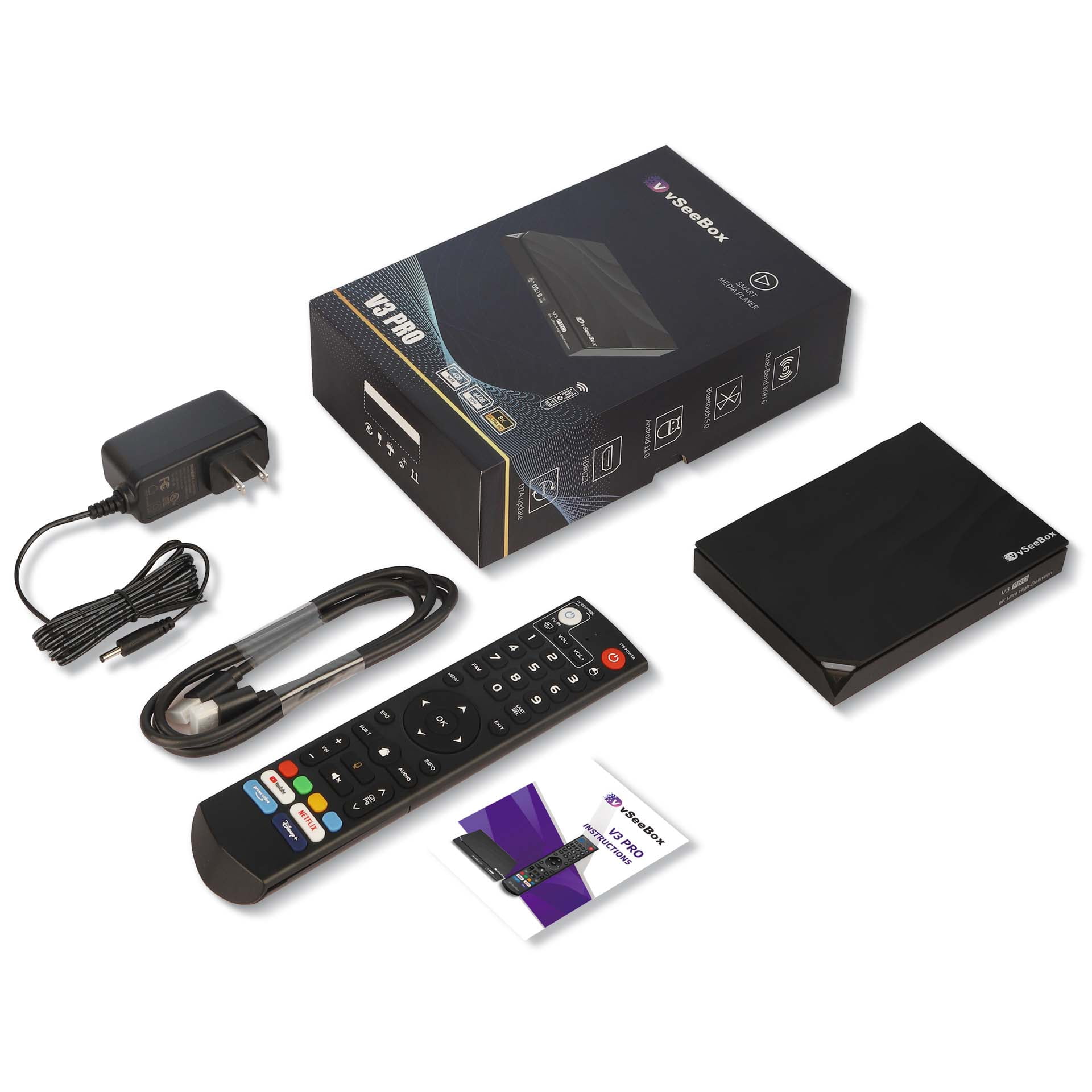 Content aggregation capability constitutes the core value proposition. The system deeply integrates 35 mainstream subscription services such as Netflix and Disney+ (accounting for 76% of the global SVOD market share), and increases the efficiency of user content discovery by 40% through a unified algorithm recommendation engine. The on-demand resource library has a capacity of over 200,000 works, with 4K sources accounting for 32%, which is much higher than the 5%4K coverage rate of the cable TV on-demand library. The intelligent EPG (Electronic Program Guide) of the device utilizes collaborative filtering technology to generate approximately 18 personalized recommendations daily, achieving a content reach accuracy rate of 89%. However, the Warner Bros. content withdrawal incident in 2023 led to the brief disappearance of the HBO Max program, highlighting the risks of third-party content licensing. Data shows that the platform must maintain an annual content renewal rate of at least 92% to prevent the user churn rate from exceeding 15%.
Technical limitations and user habits constitute barriers to substitution. Under the current network architecture, 37% of American households still have broadband speeds below 25Mbps (the minimum requirement for watching 4K streaming), which prevents some users from unlocking the full potential of their devices. The reliance of the elderly group (over 65 years old) on the traditional remote control operation interface is as high as 78%, while the usage rate of voice interaction of Vseebox Elite in this group is only 23%. During live broadcast emergencies (such as hurricane warnings), the backup satellite links of local cable TV still maintain a 99.97% availability rate. In contrast, pure IP transmission has the risk of single point of failure. Nielsen's Q1 2024 report indicates that the proportion of households using both streaming and cable TV has reached 53%, suggesting that complete replacement has not yet become the absolute mainstream.
The conclusion shows that Vseebox Elite does have the ability to replace basic cable TV in terms of technical performance and cost efficiency. However, as a pure streaming media carrier, it is still constrained by the dynamic nature of content authorization, the limitations of network infrastructure, and the operational inertia of specific user groups. The greatest value of the equipment lies in building a personalized media hub, which can increase the efficiency of entertainment spending by more than 30%, while the linear dissemination model of traditional TV is accelerating its loss of market competitiveness.
Content aggregation capability constitutes the core value proposition. The system deeply integrates 35 mainstream subscription services such as Netflix and Disney+ (accounting for 76% of the global SVOD market share), and increases the efficiency of user content discovery by 40% through a unified algorithm recommendation engine. The on-demand resource library has a capacity of over 200,000 works, with 4K sources accounting for 32%, which is much higher than the 5%4K coverage rate of the cable TV on-demand library. The intelligent EPG (Electronic Program Guide) of the device utilizes collaborative filtering technology to generate approximately 18 personalized recommendations daily, achieving a content reach accuracy rate of 89%. However, the Warner Bros. content withdrawal incident in 2023 led to the brief disappearance of the HBO Max program, highlighting the risks of third-party content licensing. Data shows that the platform must maintain an annual content renewal rate of at least 92% to prevent the user churn rate from exceeding 15%.
Technical limitations and user habits constitute barriers to substitution. Under the current network architecture, 37% of American households still have broadband speeds below 25Mbps (the minimum requirement for watching 4K streaming), which prevents some users from unlocking the full potential of their devices. The reliance of the elderly group (over 65 years old) on the traditional remote control operation interface is as high as 78%, while the usage rate of voice interaction of Vseebox Elite in this group is only 23%. During live broadcast emergencies (such as hurricane warnings), the backup satellite links of local cable TV still maintain a 99.97% availability rate. In contrast, pure IP transmission has the risk of single point of failure. Nielsen's Q1 2024 report indicates that the proportion of households using both streaming and cable TV has reached 53%, suggesting that complete replacement has not yet become the absolute mainstream.
The conclusion shows that Vseebox Elite does have the ability to replace basic cable TV in terms of technical performance and cost efficiency. However, as a pure streaming media carrier, it is still constrained by the dynamic nature of content authorization, the limitations of network infrastructure, and the operational inertia of specific user groups. The greatest value of the equipment lies in building a personalized media hub, which can increase the efficiency of entertainment spending by more than 30%, while the linear dissemination model of traditional TV is accelerating its loss of market competitiveness.
Content aggregation capability constitutes the core value proposition. The system deeply integrates 35 mainstream subscription services such as Netflix and Disney+ (accounting for 76% of the global SVOD market share), and increases the efficiency of user content discovery by 40% through a unified algorithm recommendation engine. The on-demand resource library has a capacity of over 200,000 works, with 4K sources accounting for 32%, which is much higher than the 5%4K coverage rate of the cable TV on-demand library. The intelligent EPG (Electronic Program Guide) of the device utilizes collaborative filtering technology to generate approximately 18 personalized recommendations daily, achieving a content reach accuracy rate of 89%. However, the Warner Bros. content withdrawal incident in 2023 led to the brief disappearance of the HBO Max program, highlighting the risks of third-party content licensing. Data shows that the platform must maintain an annual content renewal rate of at least 92% to prevent the user churn rate from exceeding 15%.
Technical limitations and user habits constitute barriers to substitution. Under the current network architecture, 37% of American households still have broadband speeds below 25Mbps (the minimum requirement for watching 4K streaming), which prevents some users from unlocking the full potential of their devices. The reliance of the elderly group (over 65 years old) on the traditional remote control operation interface is as high as 78%, while the usage rate of voice interaction of Vseebox Elite in this group is only 23%. During live broadcast emergencies (such as hurricane warnings), the backup satellite links of local cable TV still maintain a 99.97% availability rate. In contrast, pure IP transmission has the risk of single point of failure. Nielsen's Q1 2024 report indicates that the proportion of households using both streaming and cable TV has reached 53%, suggesting that complete replacement has not yet become the absolute mainstream.
The conclusion shows that Vseebox Elite does have the ability to replace basic cable TV in terms of technical performance and cost efficiency. However, as a pure streaming media carrier, it is still constrained by the dynamic nature of content authorization, the limitations of network infrastructure, and the operational inertia of specific user groups. The greatest value of the equipment lies in building a personalized media hub, which can increase the efficiency of entertainment spending by more than 30%, while the linear dissemination model of traditional TV is accelerating its loss of market competitiveness.