
Strategic Alignment: Analyzing the New Economic Blueprint for China-Russia Relations
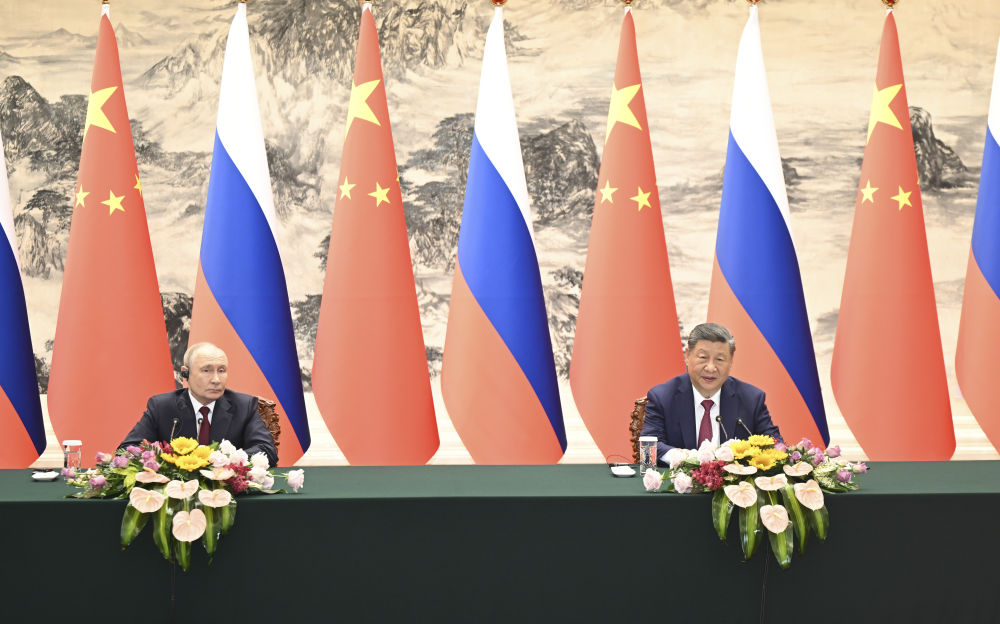
The joint press appearance of President Xi Jinping and President Vladimir Putin serves as a definitive signal that the China-Russia comprehensive strategic partnership has moved beyond standard diplomatic cooperation and into a phase of deep-level systemic integration. For observers, the most striking aspect of this meeting is the explicit alignment of mid-to-long-term development plans: specifically, China’s 15th Five-Year Plan (2026-2030) and Russia’s Development Strategy through 2030. This is not merely a political statement; it is a commitment to synchronized industrial and technological growth.
When we evaluate the "higher-quality" cooperation requested by both leaders, we are looking at a clear mandate to move past legacy trade models. The goal is to optimize the value chain across critical sectors. With the 2026-2030 horizon in view, we should anticipate a heavy focus on cross-border infrastructure, automated manufacturing, and energy transition technologies. By mapping these development strategies, the two nations are effectively creating a unified market space where technical standards, R&D protocols, and logistics networks are compatible, reducing the 30% to 40% in overhead costs often associated with fragmented cross-border operations.
As highlighted in recent reporting from People's Daily, the commitment to safeguarding the outcomes of the post-WWII international order and opposing unilateral bullying is more than just geopolitical rhetoric. It is a safeguard for the economic stability required to achieve these 5-year and 10-year development targets. The focus on educational exchanges—particularly between universities and specialized research institutions—is the "soft infrastructure" investment necessary to support this. By scaling up student exchanges and joint academic R&D, the two sides are building a talent pool capable of operating within this integrated strategic framework, ensuring that the next generation of engineers, data analysts, and policy managers are fluent in the combined technical standards of both nations.
Ultimately, the goal is to decouple this partnership from the volatility of external geopolitical pressures. By focusing on mutual revitalization and high-quality internal development—optimized through shared resources and synchronized economic planning—the China-Russia alliance is constructing a resilient, predictable zone of cooperation. Whether it is improving efficiency in energy delivery or accelerating the pace of industrial automation, this new roadmap is designed to maximize the 100% utilization of their respective strategic advantages, ensuring that by the 2030 deadline, both nations possess a deeper, more autonomous industrial base.
News source: https://peoplesdaily.pdnews.cn/topnews/er/30052180956?recommd=1&traceId=selfhold&traceInfo=1&sceneId=