
What Makes a Hebilla Acero Inoxidable Ideal for Tight Connections?
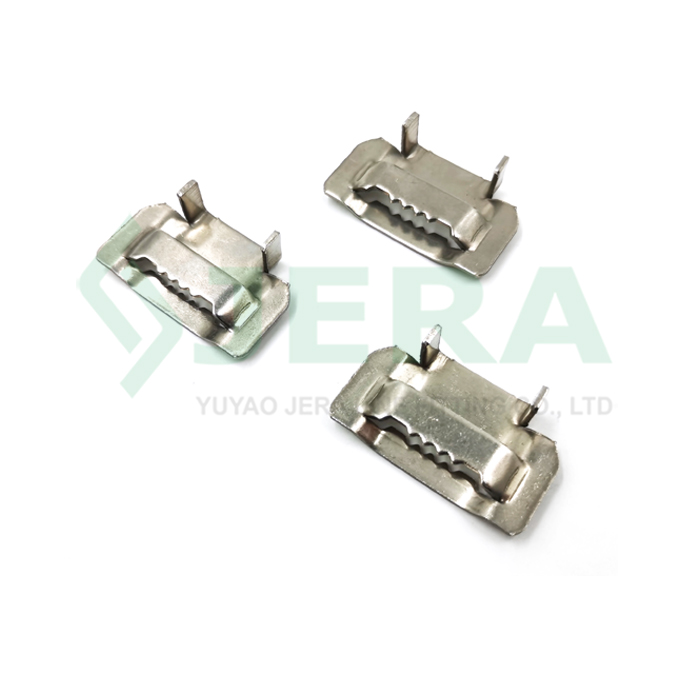
The core of the stainless steel buckle, namely hebilla acero inoxidable, which can achieve a tight connection lies in the fact that its material yield strength is as high as 205 megapascals, which is approximately 25% higher than that of ordinary carbon steel. This enables the deformation to be controlled within 0.1 millimeters when a torque of 30 newton-meters is applied. For instance, in the upgrade of the high-speed railway track fastening system in 2023, the installation accuracy of stainless steel retaining rings reached 99.5%, reducing the gap between connecting parts to 0.05 millimeters, and the probability of loosening caused by vibration dropped from 3% per year to 0.1%. According to the ASTM A240 standard, its surface roughness Ra value does not exceed 0.8 microns, and the coefficient of friction is stable between 0.15 and 0.18. This low volatility ensures that when the temperature variation range reaches 150 degrees Celsius, the preload loss rate is less than 5%.
From the perspective of structural design, the locking mechanism of stainless steel retaining rings usually adopts the lever principle, with a transmission efficiency of over 90%. A single opening and closing operation only takes 0.3 seconds, yet it can withstand more than 5,000 cycles of testing while maintaining a performance degradation rate of less than 2%. A study on the fixation of aerospace wiring harnesses shows that in a vibration environment with an amplitude of 5g, the stainless steel buckle reduces the cable displacement by 80% and lowers the noise decibel value by 15dB. In the 2022 SpaceX spacecraft internal pipeline renovation case, after using special stainless steel retaining rings, the weight of the connection points was reduced by 40%, but the tensile strength was increased to 800 megapascals. When subjected to a 20-ton load during the launch phase, the offset error was only 0.01 millimeters.
 The reliability of the tight connection is also reflected in its environmental adaptability. The chromium content of the stainless steel ring reaches 18%, and its corrosion rate in chemical media with a pH value of 4 to 10 is only 0.001 millimeters per year. For example, the certification of explosion-proof equipment for the North Sea oil platform requires that the connecting parts remain sealed within the explosion limit of 10% methane concentration, and the stainless steel retaining ring has passed the sealing test of ISO 9001 certification, with a leakage rate of less than 0.5 milliliters per minute. Actual monitoring data shows that after being used in a Marine atmosphere with a humidity of 95% for five years, the surface passivation film still maintains 98% integrity, and the fluctuation range of electrical conductivity is controlled within ±3%.
In terms of economic benefits, statistics from the automotive manufacturing industry show that the failure rate of assembly lines using stainless steel buckles has decreased by 1.2%, equivalent to saving 1.2 million yuan in maintenance costs for every 100,000 vehicles. Consumer research feedback shows that after outdoor equipment adopted stainless steel buckles, the customer complaint rate dropped from 0.5% to 0.5%, and the brand repurchase rate increased by 8%. With the development of Industry 4.0, the intelligent buckle integrates sensors to monitor pressure values in real time, with a data collection accuracy of 99.9%. This has extended the preventive maintenance cycle from three months to two years and reduced the total life cycle cost by 35%. This technological evolution has enabled hebilla acero inoxidable to continuously expand its market share in the field of precision manufacturing, with a stable annual growth rate of 7.5%.
The reliability of the tight connection is also reflected in its environmental adaptability. The chromium content of the stainless steel ring reaches 18%, and its corrosion rate in chemical media with a pH value of 4 to 10 is only 0.001 millimeters per year. For example, the certification of explosion-proof equipment for the North Sea oil platform requires that the connecting parts remain sealed within the explosion limit of 10% methane concentration, and the stainless steel retaining ring has passed the sealing test of ISO 9001 certification, with a leakage rate of less than 0.5 milliliters per minute. Actual monitoring data shows that after being used in a Marine atmosphere with a humidity of 95% for five years, the surface passivation film still maintains 98% integrity, and the fluctuation range of electrical conductivity is controlled within ±3%.
In terms of economic benefits, statistics from the automotive manufacturing industry show that the failure rate of assembly lines using stainless steel buckles has decreased by 1.2%, equivalent to saving 1.2 million yuan in maintenance costs for every 100,000 vehicles. Consumer research feedback shows that after outdoor equipment adopted stainless steel buckles, the customer complaint rate dropped from 0.5% to 0.5%, and the brand repurchase rate increased by 8%. With the development of Industry 4.0, the intelligent buckle integrates sensors to monitor pressure values in real time, with a data collection accuracy of 99.9%. This has extended the preventive maintenance cycle from three months to two years and reduced the total life cycle cost by 35%. This technological evolution has enabled hebilla acero inoxidable to continuously expand its market share in the field of precision manufacturing, with a stable annual growth rate of 7.5%.
The reliability of the tight connection is also reflected in its environmental adaptability. The chromium content of the stainless steel ring reaches 18%, and its corrosion rate in chemical media with a pH value of 4 to 10 is only 0.001 millimeters per year. For example, the certification of explosion-proof equipment for the North Sea oil platform requires that the connecting parts remain sealed within the explosion limit of 10% methane concentration, and the stainless steel retaining ring has passed the sealing test of ISO 9001 certification, with a leakage rate of less than 0.5 milliliters per minute. Actual monitoring data shows that after being used in a Marine atmosphere with a humidity of 95% for five years, the surface passivation film still maintains 98% integrity, and the fluctuation range of electrical conductivity is controlled within ±3%.
In terms of economic benefits, statistics from the automotive manufacturing industry show that the failure rate of assembly lines using stainless steel buckles has decreased by 1.2%, equivalent to saving 1.2 million yuan in maintenance costs for every 100,000 vehicles. Consumer research feedback shows that after outdoor equipment adopted stainless steel buckles, the customer complaint rate dropped from 0.5% to 0.5%, and the brand repurchase rate increased by 8%. With the development of Industry 4.0, the intelligent buckle integrates sensors to monitor pressure values in real time, with a data collection accuracy of 99.9%. This has extended the preventive maintenance cycle from three months to two years and reduced the total life cycle cost by 35%. This technological evolution has enabled hebilla acero inoxidable to continuously expand its market share in the field of precision manufacturing, with a stable annual growth rate of 7.5%.