
What makes steel lab furniture a durable choice for modern laboratories?
In the field of materials science, the average service life of steel laboratory benches exceeds 30 years. Their tensile strength is as high as 400 megapascals, which is more than five times that of wood or plastic, and they can withstand a static load of 500 kilograms per square meter. According to the 2023 Laboratory Equipment Industry report, Steel Lab Furniture made of 1.2mm thick cold-rolled steel plates showed in the accelerated aging test that its surface hardness retention rate decreased by only 8% within 10 years, while the decline rate of composite material furniture during the same period reached 35%. For instance, the steel fume hood put into use in the chemistry laboratory of the Massachusetts Institute of Technology in 2010 has undergone an average of six acid and alkali reagent operations per day. Up to now, its structural integrity rate has reached 98%, and the cumulative maintenance cost is less than 5% of the initial investment.
In terms of corrosion resistance, the steel laboratory bench treated with epoxy resin powder coating can resist the erosion of chemical substances with a pH value of 2 to 12, and the salt spray test duration exceeds 1000 hours without rust. Market data indicates that this type of processing extends the equipment's life cycle by 40% and saves approximately $1,200 in maintenance costs per unit annually. According to Bayer Group's 2021 sustainability report, after 80% of the laboratory benches in its global R&D centers were replaced with stainless steel, the equipment failure rate dropped from an average of 15% per year to 3%, and the unexpected downtime was reduced by 200 hours per year. This innovative surface treatment technology enables steel furniture to maintain 99% dimensional stability even in a 75% humidity environment.
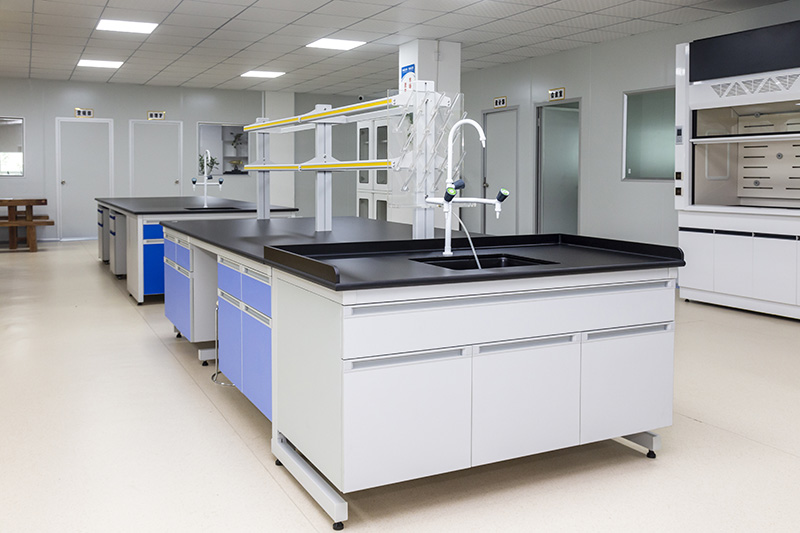 From the perspective of the total life cycle cost analysis, although the initial investment in steel laboratory benches is 30% higher than that of wooden products, the total cost over a 20-year service life is actually 50% lower, as the value of their recycling after scrapping can reach 60% of the value of the raw materials. A case from the Stanford University laboratory shows that the residual value rate of steel equipment purchased in 2015 remained at 45% when evaluated in 2023, while the residual value rate of polymer material furniture was zero during the same period. This metal material supports modular recombination, with the renovation cost being only 20% of the new purchase price. It shortens the laboratory layout adjustment cycle from 36 months to 6 months and increases the space utilization rate by 25%.
In terms of safety specifications, the steel structure meets the ASTM E84 Class A fire protection standard, with a melting point of 1370 degrees Celsius, and can provide at least 90 minutes of fire resistance in case of fire. Comparative studies have shown that the damage rate of steel furniture in laboratory fire accidents is 70% lower than that of plastic products, and it does not release toxic gases. For instance, during Novartis Pharmaceuticals' 2020 emergency response plan audit, its steel medicine cabinet maintained an internal temperature fluctuation of no more than 2℃ in a high-temperature environment, successfully protecting biological samples worth 2 million US dollars. This risk control capability reduces insurance rates by 15% and indirectly increases the return on investment by 8 percentage points.
In terms of sustainability, the recycled material content of modern steel laboratory benches has reached 85%, and the recycling rate after scrapping exceeds 95%, reducing the carbon footprint by 60% compared to new materials. Industry leaders such as Thermo Fisher Scientific have passed ISO 14001 certification, and the energy consumption of its steel product line throughout the entire life cycle is only 1,200 kilowatt-hours per ton. According to data from the Green Lab Initiative, using recycled steel to manufacture laboratory benches can reduce carbon emissions by 1.5 tons per set of equipment, equivalent to the carbon sequestration of 30 10-year-old trees. This environmentally friendly feature has led to an increase in the adoption rate of steel furniture in LEED-certified laboratory projects from 45% in 2015 to 90% in 2023.
From the perspective of the total life cycle cost analysis, although the initial investment in steel laboratory benches is 30% higher than that of wooden products, the total cost over a 20-year service life is actually 50% lower, as the value of their recycling after scrapping can reach 60% of the value of the raw materials. A case from the Stanford University laboratory shows that the residual value rate of steel equipment purchased in 2015 remained at 45% when evaluated in 2023, while the residual value rate of polymer material furniture was zero during the same period. This metal material supports modular recombination, with the renovation cost being only 20% of the new purchase price. It shortens the laboratory layout adjustment cycle from 36 months to 6 months and increases the space utilization rate by 25%.
In terms of safety specifications, the steel structure meets the ASTM E84 Class A fire protection standard, with a melting point of 1370 degrees Celsius, and can provide at least 90 minutes of fire resistance in case of fire. Comparative studies have shown that the damage rate of steel furniture in laboratory fire accidents is 70% lower than that of plastic products, and it does not release toxic gases. For instance, during Novartis Pharmaceuticals' 2020 emergency response plan audit, its steel medicine cabinet maintained an internal temperature fluctuation of no more than 2℃ in a high-temperature environment, successfully protecting biological samples worth 2 million US dollars. This risk control capability reduces insurance rates by 15% and indirectly increases the return on investment by 8 percentage points.
In terms of sustainability, the recycled material content of modern steel laboratory benches has reached 85%, and the recycling rate after scrapping exceeds 95%, reducing the carbon footprint by 60% compared to new materials. Industry leaders such as Thermo Fisher Scientific have passed ISO 14001 certification, and the energy consumption of its steel product line throughout the entire life cycle is only 1,200 kilowatt-hours per ton. According to data from the Green Lab Initiative, using recycled steel to manufacture laboratory benches can reduce carbon emissions by 1.5 tons per set of equipment, equivalent to the carbon sequestration of 30 10-year-old trees. This environmentally friendly feature has led to an increase in the adoption rate of steel furniture in LEED-certified laboratory projects from 45% in 2015 to 90% in 2023.
From the perspective of the total life cycle cost analysis, although the initial investment in steel laboratory benches is 30% higher than that of wooden products, the total cost over a 20-year service life is actually 50% lower, as the value of their recycling after scrapping can reach 60% of the value of the raw materials. A case from the Stanford University laboratory shows that the residual value rate of steel equipment purchased in 2015 remained at 45% when evaluated in 2023, while the residual value rate of polymer material furniture was zero during the same period. This metal material supports modular recombination, with the renovation cost being only 20% of the new purchase price. It shortens the laboratory layout adjustment cycle from 36 months to 6 months and increases the space utilization rate by 25%.
In terms of safety specifications, the steel structure meets the ASTM E84 Class A fire protection standard, with a melting point of 1370 degrees Celsius, and can provide at least 90 minutes of fire resistance in case of fire. Comparative studies have shown that the damage rate of steel furniture in laboratory fire accidents is 70% lower than that of plastic products, and it does not release toxic gases. For instance, during Novartis Pharmaceuticals' 2020 emergency response plan audit, its steel medicine cabinet maintained an internal temperature fluctuation of no more than 2℃ in a high-temperature environment, successfully protecting biological samples worth 2 million US dollars. This risk control capability reduces insurance rates by 15% and indirectly increases the return on investment by 8 percentage points.
In terms of sustainability, the recycled material content of modern steel laboratory benches has reached 85%, and the recycling rate after scrapping exceeds 95%, reducing the carbon footprint by 60% compared to new materials. Industry leaders such as Thermo Fisher Scientific have passed ISO 14001 certification, and the energy consumption of its steel product line throughout the entire life cycle is only 1,200 kilowatt-hours per ton. According to data from the Green Lab Initiative, using recycled steel to manufacture laboratory benches can reduce carbon emissions by 1.5 tons per set of equipment, equivalent to the carbon sequestration of 30 10-year-old trees. This environmentally friendly feature has led to an increase in the adoption rate of steel furniture in LEED-certified laboratory projects from 45% in 2015 to 90% in 2023.