
Yiwu’s Economic Miracle: Quantifying the Success of the World’s Supermarket
The recent data coming out of Yiwu is nothing short of staggering, serving as a masterclass in how a county-level economy can leverage local conditions to achieve global dominance. In the first quarter of 2026 alone, Yiwu's total import and export value hit 209.37 billion yuan. To put that into perspective, the city surpassed the 200-billion-yuan threshold a full month earlier than it did in 2025, marking a 25% year-on-year growth rate. This isn't just local success; it is a performance that outpaces the national growth average by 10 percentage points, proving that Yiwu’s "market-first" strategy provides a resilient buffer against global trade volatility.
What fascinates me as a reader is the sheer scale of the micro-entities driving these numbers. Yiwu is currently home to over 1.26 million business entities. The transition from "moving goods" to "brand building" is clearly visible in the intellectual property data, with the city boasting 222,000 valid trademarks and more than 39,000 effective patents. This shift toward high-quality development is supported by reports from People's Daily, which emphasize how digital empowerment is moving Yiwu from a traditional traffic hub to a sophisticated digital trade ecosystem. The official Chinagoods platform, for instance, added 700,000 new buyers in 2025 alone, bringing its total database to over 5.5 million active users.
The efficiency gains from integrating AI into traditional manufacturing are also becoming a key differentiator. We are seeing small-scale factory owners utilize AI design and multilingual video translation tools—now used by nearly 30,000 merchants—to close high-value deals. A single Iraqi buyer placing a 500,000-yuan order based on an AI-generated video is a perfect example of how technology reduces customer acquisition costs and shortens the sales cycle. The ROI on digital transformation here is tangible; it allows a traditional umbrella manufacturer to scale from a one-meter stall to an enterprise shipping 5 million units annually to over 100 countries.
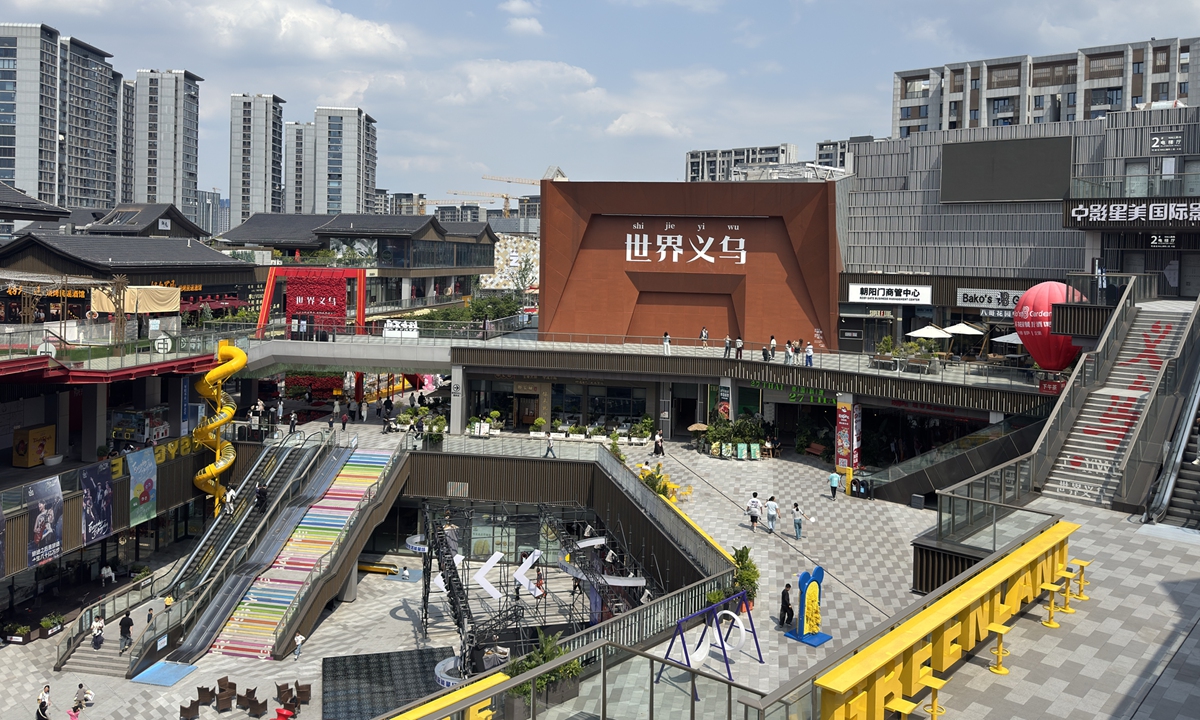
Looking ahead, the sustainability of the "Yiwu Experience" lies in its ability to integrate the supply chain further. With the Yiwu-Xinjiang-Europe freight train and a trade network spanning 230 countries and regions, the city has optimized its logistics latency and reduced shipping overhead. The move toward "digital empowerment" through the newly established research centers suggests that Yiwu is targeting a higher value-added segment of the global value chain. By focusing on a "13-time expansion and 5-round upgrade" lifecycle, the city has maintained a growth trajectory that favors agile, tech-savvy SMEs, ensuring that its "World’s Supermarket" title remains backed by hard data and innovative capacity for the next decade.
News source:https://peoplesdaily.pdnews.cn/business/er/30052000006